
The Foodies Larder – Spanish Food, Recipes and Ingredients
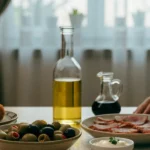
The air is thick with the scent of cured jamón, sizzling garlic and sweet, roasted peppers. A stallholder in a striped apron slices ruby-red chorizo with the speed of a concert pianist, while another stacks glistening olives into pyramids the size of your fist. Somewhere behind you, a pan of gambas al ajillo spits and bubbles, and a stranger hands you a tiny fork with a grin, insisting you try the Manchego. That is a Spanish market morning, and it is exactly the feeling we have spent years trying to bottle. Our team at The Foodies Larder is obsessed with that feeling — and with helping UK home cooks recreate it in their own kitchens, using the very best Spanish food, recipes and ingredients we can lay our hands on. Whether you are after a proper tapas recipes collection, a wedge of Spanish cheese worth savouring slowly, a bottle of sherry vinegar that will change the way you dress a salad, or a food hamper that says “I really thought about this”, you are in the right place. Pull up a chair, pour yourself a glass of something cold and let us tell you why Spanish food has become the beating heart of everything we do.
Why We’re Obsessed with Spanish Food
Our love affair with Spanish cuisine did not begin in a professional kitchen or a fancy restaurant. It began on holiday — as these things so often do — with a plate of something so simple and so perfect that it refused to leave our memory. Spain is a country that takes eating seriously in the most joyful way imaginable. Meals stretch for hours, bars fill with chatter, and the person behind the counter genuinely wants you to enjoy what you are eating. That generosity of spirit is what we try to carry into every recipe we write and every ingredient we stock.
Spain is also astonishingly diverse. The food of Andalusia, in the sun-baked south, leans on olive oil, fried fish, cold soups like gazpacho and salmorejo, and the deep, nutty flavour of jamón ibérico. Catalonia, in the north-east, gives us romesco sauce, pan con tomate and a serious love of seafood. The Basque Country, up by the Atlantic, is a world of pintxos, bacalao, txakoli wine and some of the most refined cooking in Europe. And that is before we have even mentioned Valencia and its rice, Galicia and its octopus, or Extremadura and its paprika. To cook Spanish food is to cook across an entire continent’s worth of influence, all folded into one country.
Our First Taste of Spain
We can still remember the first proper plate of patatas bravas that stopped us in our tracks. Not the version you find in a chain restaurant with a blob of mayonnaise and a sprinkle of paprika, but the real thing: crisp-edged potatoes, a smoky tomato sauce with a gentle hum of heat, and a garlic aioli so good we nearly ordered a second portion before finishing the first. It was in a tiny bar in Seville, standing up, elbow to elbow with locals, and it taught us something important. Spanish food is not about showing off. It is about making a few brilliant ingredients sing.
That trip was the beginning. We came home with suitcases heavier than they should have been, stuffed with tins of pimentón, bottles of sherry vinegar and more cheese than any reasonable customs officer should allow. We started cooking from memory, then from proper Spanish cookbooks, then from recipes scribbled down by friends we made along the way. Every dish was a small attempt to get back to that bar, that market, that sunshine.
From Holiday Kitchens to Our Own Larder
What started as a holiday habit quickly became a full-blown obsession. We began hunting down authentic Spanish ingredients in the UK, and we quickly discovered we were not alone. There is a whole world of Spanish food lovers here, from the legendary Brindisa — a well-known UK supplier of Spanish foods, founded in 1988 — to smaller delis and online shops that have built their reputations on getting the good stuff into British kitchens. Brands like Los Peperetes, with their beautiful tinned fish and seafood, became staples in our cupboards. We learned that you do not need a plane ticket to eat well; you need good suppliers, a little curiosity and a willingness to cook.
Eventually, that obsession turned into The Foodies Larder. We wanted a place where UK home cooks could find honest advice, reliable recipes and ingredients we genuinely use ourselves. Not a museum of Spanish food, but a working larder — the kind you actually cook from on a Tuesday night when you cannot face another pasta bake.
What Makes Spanish Food So Special
Ask us what makes Spanish food so special and we will give you a few answers, all of them true. First, the ingredients. Spanish cooking is built on a handful of pantry heroes — olive oil, sherry vinegar, pimentón, garlic, good tinned fish, cured meats and cheese — and each one is treated with respect. Second, the philosophy. Spanish food is designed to be shared. Tapas is not a starter; it is a way of eating, a way of talking, a way of spending an evening. Third, the generosity. Nobody in Spain ever says “that is enough garlic”.
- Olive oil — the backbone of almost every dish, from frying to finishing.
- Sherry vinegar — sharp, complex and endlessly useful in dressings and sauces.
- Pimentón — smoked paprika that adds depth and colour in a single pinch.
- Cured meats — jamón, chorizo and lomo, sliced thin and eaten slowly.
- Cheese — Manchego, Idiazábal and more, perfect with a glass of sherry.
- Tinned fish — anchovies, sardines and tuna that deserve a place of honour.
Put those things together and you have the foundation of a cuisine that rewards very little effort with an enormous amount of pleasure. That, in a nutshell, is why we are obsessed.
Essential Spanish Ingredients for Your Kitchen
If you want to cook Spanish food at home, you do not need a cupboard full of exotic equipment. You need a short list of brilliant ingredients and the confidence to use them. Here is where we would start, and where we would spend our money if we were building a Spanish larder from scratch.
Sherry Vinegar: The Secret Weapon
If there is one ingredient that separates a good Spanish kitchen from a great one, it is sherry vinegar. Made from sherry wine in the Sherry Triangle around Jerez, it is aged in oak barrels using the solera system, which gives it a deep amber colour and a flavour that is simultaneously sharp, nutty and slightly sweet. Sherry vinegar from Jerez is protected by Denominación de Origen status, which means what you are buying is the real thing, made in a defined region to strict rules. Once you have cooked with it, ordinary vinegar will feel like a poor substitute.
Use it in vinaigrettes for tomato salads, in a pan of sautéed mushrooms, drizzled over roasted peppers, or whisked into a sauce for pork. A few drops can lift a bowl of soup or a plate of grilled vegetables into something memorable. It is also the secret behind a proper gazpacho, where its acidity balances the sweetness of ripe tomatoes. Buy a good bottle and use it often — it will last for ages and it will change your cooking.
Spanish Cheese: Manchego, Idiazábal and More
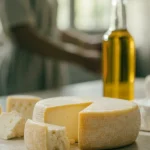
Spanish cheese deserves far more attention than it gets. Manchego, made from the milk of Manchega sheep in La Mancha, is the most famous — firm, slightly salty, with a distinctive herringbone rind and a flavour that ranges from mild and creamy when young to sharp and intense when aged. It is wonderful sliced thin with a drizzle of olive oil and a few Marcona almonds, or melted into a tortilla.
Idiazábal, from the Basque Country, is another favourite. Made from unpasteurised sheep’s milk, it is smoky when traditionally smoked over beechwood, with a firm, slightly crumbly texture and a nutty, almost buttery finish. It pairs beautifully with membrillo (quince paste) and a glass of dry sherry. Beyond those two, look out for Tetilla from Galicia, Cabrales if you love blue cheese, and Mahón from Menorca, which is lovely with a little olive oil and pepper.
In the UK, Borough Market in London is a key place to buy Spanish ingredients like Manchego and jamón, and it is well worth a visit if you are anywhere nearby. Brindisa also stocks an excellent range, and Delicioso is another name worth knowing. If you cannot get to a market, a good online deli will see you right.
Pimentón, Olive Oil and Other Pantry Heroes
Pimentón is smoked paprika, and it comes in three main types: dulce (sweet), agridulce (bittersweet) and picante (hot). It is made by drying peppers over oak fires and grinding them into a fine powder, and it is essential to dishes like patatas bravas, chorizo a la sidra and countless stews. A pinch stirred into a pan of onions will make your kitchen smell like a Spanish grandmother’s.
Spanish olive oil is the other cornerstone. Look for extra virgin oil from Andalusia, particularly around Jaén, where the Picual olive dominates. It is fruity, peppery and perfect for both cooking and finishing. Do not be afraid to use it generously — Spanish cooks certainly do not.
- Ortiz anchovies — a popular brand among UK tapas enthusiasts, and for good reason. Try them on toast with butter.
- Los Peperetes — beautiful tinned seafood, including sardines and mussels, that turns a simple plate into a feast.
- Marcona almonds — fried in oil and salted, the ultimate tapas bar snack.
- Membrillo — quince paste, the classic partner to Manchego.
- Piquillo peppers — sweet, smoky and ready to stuff with cheese or tuna.
- Sherry — a bottle of fino or manzanilla in the fridge is a game-changer.
Build your larder around these and you will be able to cook a proper Spanish meal at a moment’s notice, any night of the week.
Tapas Recipes We Can’t Stop Making
Tapas is not a menu; it is a way of life. The word comes from the Spanish verb tapar, to cover, and the tradition began as a small slice of bread or cheese placed over a glass of wine to keep the flies out. From that humble beginning grew one of the world’s great ways of eating: lots of small plates, shared across a table, eaten slowly with plenty of conversation. Here are the tapas recipes our team returns to again and again, plus our advice on building a proper spread at home.
Classic Tapas: Patatas Bravas and Gambas al Ajillo
Patatas bravas is the dish that made us fall in love with Spain. The idea is simple: potatoes, fried until crisp, then topped with a spicy tomato sauce and a garlicky aioli. The reality is a dish that disappears from the table in minutes. Our version roasts or fries the potatoes until deeply golden, then spoons over a bravas sauce made from tomatoes, pimentón, a little chilli and a splash of sherry vinegar. The aioli should be punchy with raw garlic and sharpened with lemon. Do not skimp on either sauce.
Gambas al ajillo is the other classic we cannot stop making. Prawns, cooked in a generous pool of olive oil with sliced garlic and a dried chilli, finished with a squeeze of lemon and a scatter of parsley. The key is to get the oil hot enough to sizzle but not so hot that the garlic burns, and to serve it immediately, with good bread to mop up the oil. It is one of the fastest, most satisfying dishes in the Spanish repertoire, and it works beautifully with frozen prawns, which most UK supermarkets sell.
Other classics worth mastering include tortilla española (the thick potato and onion omelette), pan con tomate (bread rubbed with tomato, garlic and olive oil), and boquerones en vinagre (white anchovies marinated in vinegar and garlic). Each one is simple, and each one is a small piece of Spain.
Modern Twists on Traditional Tapas
We love tradition, but we also love playing. Some of our favourite tapas recipes take a classic idea and nudge it in a new direction, usually because of what is available in a British kitchen. Here are a few twists we keep coming back to:
- Patatas bravas with aioli and smoked paprika — add a spoonful of pimentón to the aioli for extra depth.
- Gambas al ajillo with a splash of sherry — a little fino or manzanilla in the pan adds a lovely nutty note.
- Chorizo cooked in cider — a Basque classic that works brilliantly with British cider.
- Manchego and membrillo on toast — a sweet-salty combination that never fails.
- Piquillo peppers stuffed with goat’s cheese — a five-minute dish that looks like you tried much harder.
There is no rule that says tapas has to be strictly Spanish. The spirit of tapas is generosity, small plates and good company. If a British ingredient makes a dish taste better, use it.
How to Build the Perfect Tapas Board
A great tapas board is about balance: something salty, something sharp, something rich, something fresh. Start with the cured meats and cheese, then add a couple of cooked dishes, a bowl of olives, some good bread and a few tinned fish. Finish with something sweet, like membrillo or a couple of squares of dark chocolate. Serve everything at room temperature unless it is meant to be hot, and put the hot dishes out as they are ready rather than trying to time everything at once.
- Cured meats — jamón ibérico, chorizo, lomo.
- Cheese — Manchego, Idiazábal, Mahón.
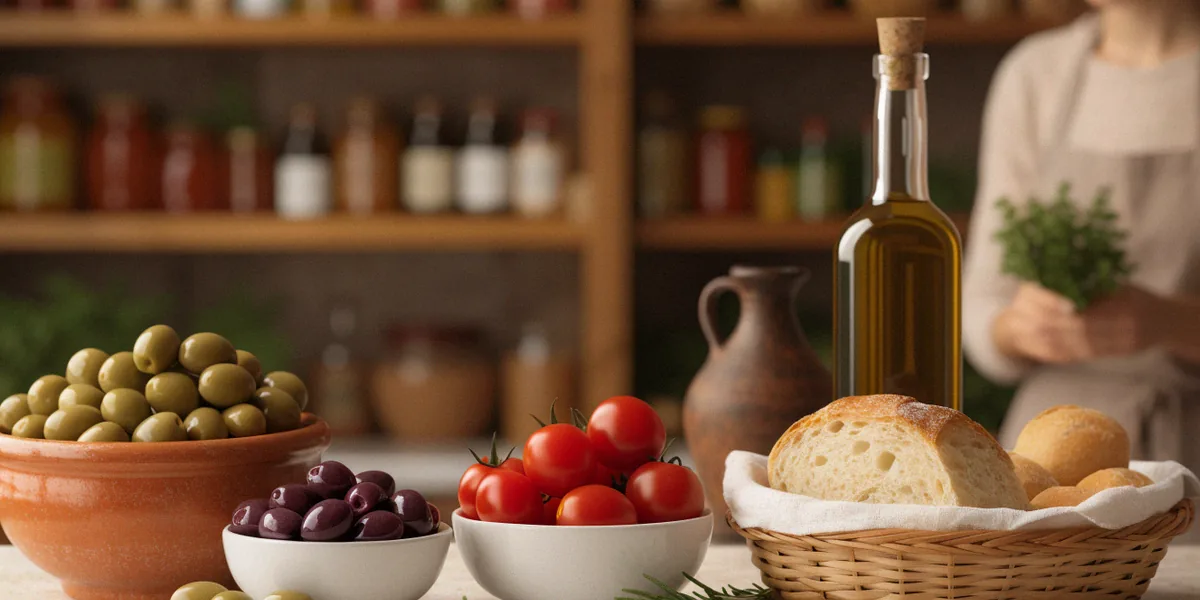
- Olives — a mix of green and black, ideally with a little orange peel.
- Tinned fish — Ortiz anchovies, sardines, mussels.
- Cooked dishes — patatas bravas, gambas al ajillo, tortilla.
- Bread and oil — a good sourdough with Spanish extra virgin olive oil.
- Something sweet — membrillo, turrón or dark chocolate.
Serve with a chilled fino, a glass of Rioja or even a cold beer, and you have an evening that feels like a holiday.
Spanish Food Hampers and Gifts
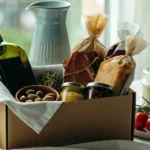
Some of the best presents are edible. A well-chosen food hamper says something that a scarf or a scented candle cannot: it says, “I know what you like, and I want you to enjoy it.” Our Spanish food hampers are built around exactly that idea. We fill them with the things we would want to receive ourselves — proper Spanish cheese, good chorizo, a bottle of sherry vinegar, a tin of Ortiz anchovies, a jar of pimentón and a few treats besides.
What Goes Into Our Hampers
Every hamper we put together is designed to tell a story about Spanish food, and to give the recipient everything they need to cook something wonderful. A typical hamper might include:
- A wedge of aged Manchego and a piece of Idiazábal.
- A whole chorizo, ready to slice, plus a packet of jamón.
- A bottle of sherry vinegar from Jerez.
- A tin of Ortiz anchovies and a jar of piquillo peppers.
- A tin of pimentón and a small bottle of Spanish olive oil.
- Marcona almonds, olives and a bar of turrón for afterwards.
We also offer hampers built around specific themes — a tapas night box, a cheese and sherry selection, or a store cupboard starter kit for someone who is new to Spanish cooking. If you cannot decide, our team is always happy to help you put something together.
Perfect for Gifting: Birthdays, Christmas and More
Spanish food hampers work for almost any occasion. Christmas is our busiest time, when a box of Spanish treats feels like a little bit of sunshine in the middle of a grey British winter. Birthdays, anniversaries, housewarmings, thank-yous for a neighbour who fed the cat — all of them are better with a hamper. They are also a lovely gift for someone who loves to cook but has everything, because good ingredients are always welcome.
If you are buying for a foodie, consider matching the hamper to their interests. Someone who loves to cook will appreciate the sherry vinegar and pimentón; someone who prefers to nibble will love the cheese and anchovies. And if you are sending a gift to a fellow tapas enthusiast, a box built around Ortiz anchovies and a good bottle of sherry is almost guaranteed to please.
UK Delivery and Packaging
We deliver across the UK, and we take packaging seriously. Everything is packed carefully so that bottles arrive intact, cheese arrives in good condition and nothing rattles around in transit. Where possible we use recyclable materials, because we would rather not wrap beautiful Spanish food in a mountain of plastic. Orders are typically dispatched quickly, and we are always happy to include a handwritten note if you are sending a hamper directly to the recipient.
Whether you are ordering for yourself or for someone else, we want the box to feel like a gift the moment it arrives — not just when it is opened.
Our Team’s Top Tips for Cooking Spanish at Home
Cooking Spanish food at home is easier than many people think, but there are a few things worth knowing before you start. Here are the tips our team reaches for most often, drawn from years of cooking, eating and occasionally getting it wrong.
Sourcing Authentic Ingredients in the UK
The good news is that authentic Spanish ingredients are easier to find in the UK than ever before. Brindisa, founded in 1988, remains one of the best-known suppliers, with shops in London and a strong online presence. Borough Market is a wonderful place to browse, especially if you want to taste before you buy. Delicioso is another reliable name, and The Tapas Lunch Company is a UK-based online retailer for Spanish food that many home cooks swear by. Between them, you can get almost anything you need delivered to your door.
If you live near a good deli, make friends with the people behind the counter. They will tell you which Manchego is drinking well this month, which chorizo is worth the extra money, and which sherry vinegar they cook with at home. That kind of advice is worth more than any label.
Simple Techniques for Big Flavours
Spanish cooking rewards a few simple techniques. Learn to sweat onions slowly in olive oil until they are sweet and soft. Learn to fry garlic gently so it turns golden rather than bitter. Learn to finish a dish with a good vinegar or a squeeze of lemon, and to season at the end as well as the beginning. Learn to use heat properly — a hot pan for prawns, a low oven for a tortilla. None of these things are difficult, but together they make an enormous difference.
Above all, taste as you go. Spanish food is not precise in the way that pastry is precise. It is about adjusting, balancing and trusting your own palate. If it needs more salt, add more salt. If it needs more acid, add a drop of sherry vinegar. Cooking is not a test; it is dinner.
Common Mistakes to Avoid
- Using cheap olive oil for everything — good oil is not just for finishing; it is the flavour of the dish.
- Burning the garlic — burnt garlic is bitter and will ruin a pan of gambas in seconds.
- Skipping the vinegar — a little sherry vinegar wakes up almost any dish.
- Serving everything at once — tapas is better when dishes arrive in waves.
- Being shy with the pimentón — smoked paprika is there to be used, not admired from a distance.
Avoid those five and you will already be cooking better Spanish food than most restaurants in the UK.
Frequently Asked Questions
What is the best sherry vinegar for UK home cooks?
Look for a bottle labelled “Vinagre de Jerez” with Denominación de Origen status. This guarantees it was made in the Sherry Triangle around Jerez using traditional methods. Ageing matters too — a reserva or gran reserva vinegar will be darker, smoother and more complex than a young one. Any good Spanish deli or online supplier in the UK will stock at least one, and it is worth spending a little more than you might on ordinary vinegar.
Where can I buy Spanish cheese in the UK?
Brindisa is one of the best-known UK suppliers of Spanish foods and has a strong range of Manchego, Idiazábal and other Spanish cheeses. Borough Market in London is another excellent option, with several stalls specialising in Spanish ingredients. Delicioso and The Tapas Lunch Company also stock Spanish cheese online, and many larger supermarkets now carry a basic Manchego. For the widest choice, a specialist deli or online retailer is your best bet.
Are Ortiz anchovies worth the extra cost?
In our opinion, yes. Ortiz anchovies are a popular brand among UK tapas enthusiasts for good reason: they are plump, firm, and packed in good olive oil, with a clean, savoury flavour rather than the harsh saltiness of cheaper tins. They are excellent straight from the tin on buttered toast, and they will convert anyone who thinks they do not like anchovies. If you are building a tapas board, they are one of the first things we would add.
Can I make tapas recipes with ingredients from a normal supermarket?
Absolutely. Many classic tapas recipes — patatas bravas, gambas al ajillo, tortilla española — can be made with ingredients from a standard UK supermarket. You may need to visit a deli or order online for sherry vinegar, pimentón or Manchego, but the fresh components are widely available. Frozen prawns work perfectly for gambas al ajillo, and ordinary potatoes are exactly what patatas bravas calls for. The key is the seasoning and the oil, not the rarity of the ingredients.
Do you deliver Spanish food hampers across the UK?
Yes, we deliver Spanish food hampers throughout the UK. Everything is packed carefully to protect bottles and cheese in transit, and we use recyclable materials wherever we can. If you are sending a hamper as a gift, we can include a handwritten note, and we are always happy to help you choose the right contents for the person receiving it. Get in touch with our team if you have a specific request.
Spanish food is one of life’s great pleasures, and it belongs in British kitchens just as much as it belongs in a bar in Seville. We hope this guide has given you the confidence to cook, the curiosity to explore, and a shopping list worth acting on. Browse our recipes for tapas inspiration, explore our Spanish ingredients for the pantry heroes that make everything taste better, and take a look at our food hampers if you are looking for a gift that will genuinely be remembered. From our larder to yours — buen provecho.
Latest articles
- Tapas at Home: Six Easy Plates
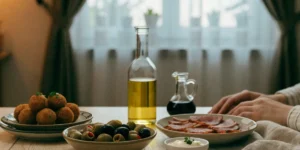 Tapas at Home: Six Easy Plates It is a Tuesday evening, the fridge is half empty, and we are craving the buzz… Read more: Tapas at Home: Six Easy Plates
- Spanish Food Hampers: What to Include
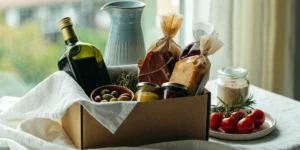 Spanish Food Hampers: What to Include There’s a particular delight in watching someone open a Spanish food hamper. First comes the rustle… Read more: Spanish Food Hampers: What to Include
- Spanish Cheese Beyond Manchego
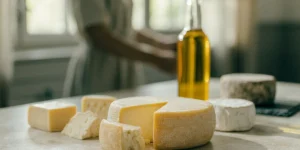 Spanish Cheese Beyond Manchego: A Journey Through Spain’s Regional Cheeses Stand at any good Spanish cheese counter and you’ll spot the familiar… Read more: Spanish Cheese Beyond Manchego
- Sherry Vinegar: How to Use It
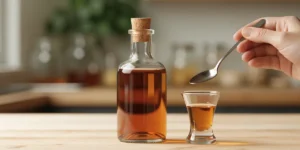 Sherry Vinegar: How to Use It in Your Spanish Kitchen We still remember the moment it clicked. We were sitting at a… Read more: Sherry Vinegar: How to Use It
- Saffron: Buying and Cooking Guide
 Saffron: Our Buying and Cooking Guide for Spanish Food Lovers We still remember the first proper paella Valenciana we ate in Spain… Read more: Saffron: Buying and Cooking Guide
- Paella: Regional Styles Compared
 Paella: Regional Styles Compared Our team’s first proper paella experience happened in a bustling plaza in Valencia, sat at a wobbly table… Read more: Paella: Regional Styles Compared